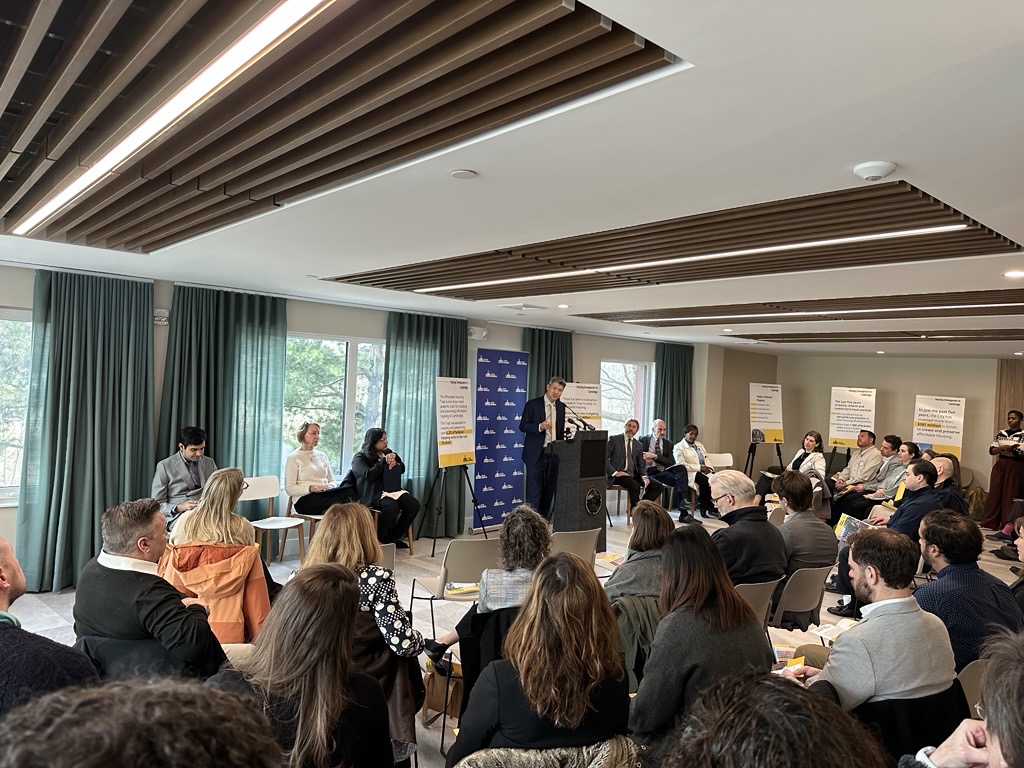
The following is a letter from the City Manager to the City Council in response to his annual performance review.
November 13, 2026
To the Honorable, the City Council:
Cambridge is an amazing community, and I’m grateful for the privilege of working with each of you.
We are living through a turbulent and challenging test of our national democracy. Cambridge has been in strenuous disagreement with federal policy, fighting in court, issuing new policies, and providing City funding to protect the most vulnerable in our community. We stood beside our community nonprofits and the people they serve and I’m thankful that help is now arriving.
We have continued to do the critical work of local government and do it well. We are diligently working on housing, transportation, economic growth, and support for local and small businesses. We are addressing climate change and investing in a more sustainable city. We are housing the homeless, building more affordable housing, and expanding access to mental health and substance use treatment.
I’m grateful to the City Council for all of your efforts and partnership and for the expertise and dedication of so many City leaders and staff who show up every day to build a better community for all of us who live, work, study, and play in Cambridge.
Through all of this, we have discussed and debated and made hard decisions. We have held open meetings, experimented with new forms of community engagement, and shown that our democracy is vibrant and healthy.
This is now the fourth year we have conducted a City Manager Performance Review, which is an important commitment to transparency and accountability. This annual report will be followed by the City Council’s formal evaluation delivered at a Special City Council Meeting in December.
There are always things to improve, lessons to be learned, more work to be done, and accomplishments to celebrate. I’m looking forward to the conversation and feedback.
Very truly yours,
Yi-An Huang
Introduction
This is the fourth year of conducting a City Manager Performance Review. With the beginning of a new 2026-2027 Council term, we reflected on what is working and what could be improved. The main feedback that I heard is that the review mainly addressed internal City goals and initiatives. This made sense in the early years, but over time, there has been a desire to focus on what matters most to our community – the impact that the City Council and the City Administration are having on housing, transportation, economic opportunity, sustainability, and more.
This new approach will therefore focus our performance conversation on our goal areas, which depends on the collective work of both the City Council and the City Administration. The ultimate performance of the City is driven both by a strong and effective City Administration and the health of our collaboration with an engaged City Council.
As always, I continue to be open to how we can reflect on our work together, learn, and improve.
Housing
As consistently noted in the annual Cambridge Resident Survey, housing is the most important issue confronting our community. The cost to rent or buy in Cambridge has driven some residents to look outside of the City, and families who have lived here for generations struggle to stay because housing is so expensive.
We have made historic investments in affordable housing, and I’m proud of the incredible progress we have made. Eight years ago, the City contributed less than $15 million per year to the Affordable Housing Trust. Today, we are making more than $40 million of investments per year and our pipeline of projects has increased to more than 1,000 new homes for families, people with disabilities, older adults, and people transitioning from homelessness.
The City Council has played a critical role: eliminating parking minimums, increasing commercial development fees, and passing and later strengthening the Affordable Housing Overlay (AHO) that streamlined the permitting process and provided additional bonuses to affordable housing developments. The city we are building is one where affordable developments blend into our neighborhoods and create an integrated community across every area of Cambridge. While there continues to be so much need for public housing, we are on the right track. In just the last year, we have made major property acquisitions to transition market rate units to permanently affordable/publicly controlled housing and purchased new development sites for affordable construction.
We are also continuing to implement the Multi-Family Housing Ordinance, the most significant zoning change for Cambridge over the past decades. One of our key leaders said to me after the ordinance passed, “now the work really begins!” We have seen some success. The City’s Housing Development Dashboard shows that since February 2025, in re-zoned neighborhoods, we now have 750 new units in the pipeline, including nearly 200 new affordable units. However, we have also experienced significant community concern in areas where zoning previously wouldn’t have permitted four story or six story housing, including over demolitions, scale, impact on trees, stormwater, and parking.
The City is responding. In addition to a dashboard tracking housing development, we have appointed a multi-family housing community liaison to coordinate questions and share information with the community. We have produced a Multifamily Housing Neighbor’s Guide, a Multifamily Housing Zoning Primer, and additional information on the permitting process. We have also worked with the City Council to propose draft zoning amendments which would provide incrementally greater setbacks that may moderate some of the impacts that have generated concerns.
I share the City Council’s commitment to building more housing of all types. This commitment is now present at all levels of government. The Healey-Driscoll administration has made housing a top priority and has set ambitious targets for Massachusetts: 222,000 new units by 2035. At the national level, housing has become a bipartisan issue, and Congress recently passed the first comprehensive housing reform bill in decades.
Unfortunately, the economic environment for construction is incredibly difficult. The current pace of housing production is significantly below even our historical baseline and 2024-2025 saw the slowest new home construction in the last decade. Interest rates, which appeared to be going down, are now going up. Construction costs remain elevated from global uncertainty and tariffs. And we are seeing the impact: an experienced developer shut-down a major permitted project even after significant time and investment because they couldn’t get financing, representing hundreds of units of housing that will not be built.
There are important policy discussions in front of us. We are considering zoning changes in Central Square, the civic and cultural center of our City. We completed a study on the inclusionary housing ordinance and will be discussing whether adjustments are needed to get larger projects to move forward. And though we have not had much public discussion, I believe the need for more middle-income housing is a critical issue. Housing in Cambridge increasingly works only for families who have low enough income to qualify for affordable housing or families who are wealthy enough to buy at $1,000 per square foot. Teachers, nurses, fire fighters, and so many working professionals are stuck with unaffordable options and moving out of Cambridge. We need to explore more innovations and solutions. I’m excited about the work we have before us, including a task force on social housing that will explore new models for development.
There is more to do, and I’m grateful for the partnership with the Council, community, and so many amazing organizations in the City on this critical work.
Economic Opportunity and Equity
The City continues to provide significant support to local and small businesses to ensure that we are building a diverse and inclusive economic community. The Economic Opportunity and Development team provides financial assistance, technical support, and business development resources with programs that are intentionally designed to support people that often face barriers to accessing capital, customers, and established business networks.
Over the last year, we have increased our grantmaking and support, providing more than 50 grants that totaled almost $600,000 and assisting nearly 570 small business owners. We have also expanded our small business anti-displacement tools and resources, supported youth entrepreneurship, and increased resources to address vacant storefronts, permitting assistance, business coaching, and legacy business planning.
Building off many of our incredible annual cultural events, our World Cup watch parties this summer proved to be a major success, drawing large and enthusiastic crowds that energized public spaces in many of our squares and parks and delivering a significant boost to local businesses. Restaurants, retailers, and neighboring establishments saw increased foot traffic and customer spending as residents and visitors gathered to celebrate the matches together.
We have continued to invest in our Supplier Diversity Program, providing direct technical assistance to help vendors navigate our new eProcurement Portal, increasing opportunities by breaking up procurement contracts, and partnering with the City of Boston to streamline certification for minority, veteran, and women-owned businesses. To create new pathways for opportunity, our fourth annual Diversity Supplier Fair brought together City departments and local businesses last month in a unique, reverse-tradeshow format designed to make procurement more accessible and inclusive. We are seeing results: during FY26, we allocated $7.3 million to new minority business enterprises, exceeding our 10% participation goal.
Finally, we have also begun to expand our work on the broader economic growth agenda. For many years, Cambridge has benefitted from the growth of the innovation economy centered in Kendall Square. We have had all the core ingredients – Harvard and MIT, the Broad Institute and the Ragon Institute, and a robust set of incubators including the Cambridge Innovation Center, Lab Central, and the Engine at MIT. However, as we face a local economic slowdown, greater national and global competition, and major technological shifts, it’s critical that we are more intentional about investing in the innovation engine in Cambridge that is driving our regional economy.
We have begun these discussions and held an Economic Development Committee meeting on the Innovation Economy on June 9 followed up by a City Council Roundtable on Artificial Intelligence on August 6. We will hold a follow-up City Council Roundtable on the Innovation Economy on December 14 and are working on developing more concrete policy options.
Before life sciences was a thriving sector, Cambridge took a critical first step by creating clear, reasonable, and fair regulations on genetic testing. This became part of the foundation for the growth of Kendall Square. As we face a new set of economic challenges and a different set of opportunities and threats, I believe the City needs to find a more active role – and decide on how we can best support our future economic growth.
Transportation
This year, we made significant progress toward Cambridge's transportation goals. In the fall, we reached the final implementation milestone of the Cycling Safety Ordinance with all 25 miles of separated bike lanes completed or in construction. This has not been an easy journey and a major achievement was the completion of the Broadway bike lanes between Columbia Street and Quincy Street. This segment is especially critical as a safer connection for students, families, and community members traveling to Cambridge Rindge and Latin School and the Main Library.
The Intersection Safety Program also substantially advanced this year. We launched a comprehensive program website and a new safety intervention toolbox to guide future improvements. Safety upgrades are now underway across the City, including intersection redesigns at the three highest-crash locations, targeted treatments such as turn hardening at six locations, and safety improvements at eight additional intersections completed through the Cycling Safety Ordinance and other corridor projects.
The City continued its close partnership with regional agencies to improve public transit service. This year, we supported the MBTA's implementation of Bus Network Redesign improvements, resulting in increased service on many Cambridge bus routes and the Red Line. Service enhancements have already been implemented on routes including the 1, 64, 66, 71, 73, and 77, among others, with additional improvements still to come.
The Charles River Transportation Management Association's EZRide Shuttle also continued its expanded service and saw strong ridership growth. As of early 2026, ridership was projected to increase by 27% over the previous year, driven in part by strong demand for the new midday service. This fare free option connecting North Station, Lechmere, Kendall, and CambridgePort/Central Square has showed the potential to expand community benefits through public-private partnerships.
To expand access to bicycling, the City's ARPA-funded Bike Access Program helped 353 low-income residents purchase bicycles, including adaptive bikes, e-bikes, e-cargo bikes, and traditional pedal bikes. The program has increased access to affordable and sustainable transportation options for residents across Cambridge.
Sustainability and Climate Resilience
Buildings make up 90% of all of Cambridge’s carbon emissions. In 2023, the City Council passed a stronger version of BEUDO (Building Energy Use Disclosure Ordinance) which requires Cambridge’s largest non-residential buildings to become net carbon neutral between 2035 and 2050, depending on their size. We are about to complete our first BEUDO compliance year for buildings larger than 100,000 square feet, which requires carbon emission reduction of 20%.
The process has required significant attention to technical detail and we are thrilled that data reporting compliance is now over 95%. The City has also launched additional technical support and established a review board to help properties manage the challenges of successful decarbonization. We have set ambitious targets and this year has been a major step toward a more sustainable future.
We have made a major investment in renewable energy as part of a virtual Power Purchase Agreement that has developed new wind and solar production. Bowman Wind and Prairie Solar began operations this year and are now supplying renewable electricity for 100% of our municipal operations and approximately 75% of the electricity used by Cambridge residents and small businesses. We have also continued to electrify our municipal fleet, adding a fourth all-electric garbage packer and achieving our stretch goal of reducing our emissions by 25% compared to baseline.
Cambridge’s recycling program continues to advance and the City Council has adopted our Zero Waste Master Plan 2.0 which strengthens the City’s ordinance to reduce trash, increase recycling and food waste diversion, and improve neighborhood cleanliness (less rats!). The new requirements will expand food waste separation and recycling at larger residential and commercial properties, divert valuable materials from disposal, and reduce greenhouse gas emissions associated with waste.
Finally, this year we provided a five-year update to the Urban Forest Master Plan. The City has ramped up tree planting with more than 1,200 new trees planted every year, diversified our forest by adding 109 unique species across our community, and focused on planting details and care to increase tree health and survival. Using sophisticated canopy mapping and analytics in collaboration with the University of Vermont, we have measured our progress and have achieved an increase in tree canopy from 25.3% to 30.2% with over 200 acres of net gain in tree canopy from 2018 to 2024. This has been a monumental achievement by all of staff in the Department of Public Works, Urban Forestry, and so many community partners who have supported our work including volunteers who have helped care for street trees in their neighborhoods.
Government and Council Performance
This was the first year of a new Council term and we have made it a regular practice to focus on the health of our government and how we collaborate and perform together. I’m grateful to the Mayor, Vice Mayor, and Councillors for reaffirming our goal areas and shared values, and establishing improved City Council rules and norms.
Each year, we have increased trust, transparency, and collaboration. City leaders and staff are working more closely with the City Council to inform policy orders and participate in discussions, something that was infrequent in previous terms. The process of passing policy orders and receiving awaiting report responses has continued to work. During the 2024-2025 Council term, 138 policy orders were passed requesting a report back from the City, and we responded to every single one. Our commitment remains the same and we are typically working on 20-25 awaiting reports at any given time.
We have also established a much more structured and clear budget process that spans the full 12 months of the year beginning in October with a City Council and School Committee Roundtable on economic projections and budget target setting and ending in the following September with setting the tax rate once property valuations have been finalized.
This year, we also began a more inclusive and transparent process for setting City Council budget priorities at the beginning of the term. In prior years, a challenge has been the City Council speaking clearly as a body in favor of new initiatives that require funding, but without a clear way to prioritize which projects are more important. Working with the Finance Co-Chairs, we set Council priorities and established three areas of work: Social Housing, Expanding Childcare Access, and Supportive Housing.
We have now established two task forces that include City Councillors, key City leaders and staff, community members and experts. The Social Housing Task Force began meeting in June and the Childcare Access Joint Task Force began meeting in September. Both initiatives are on track to produce recommendations on goals, program design and rollout, and estimated budget for us to review in 2027.
We have also made more decisions in response to community input. The original plan for Ahern field was a state-of-the-art turf that would utilize organic material and provide a more consistent and durable playing surface for youth sports. However, after hearing significant community input, the City has reverted to preserving a natural grass field. Similarly, the City opened a conversation about the future of the 25 Lowell Street property, and based on strong community support, we are moving forward with a long-term lease arrangement for a community nonprofit.
Finally, we have worked closely across the City Council and City to find new and innovative ways to engage the community. After a difficult City Council debate over Shotspotter and the tragic murder of Xavier Bautista, a City Public Works employee, we have convened Cambridge’s first Civic Assembly – 40 residents selected by lottery to reflect the diverse neighborhoods, backgrounds, and experiences across our community. The Assembly will consider whether, how, and under what conditions Cambridge should use surveillance technologies to support public safety, including technologies such as gunshot detection systems and video surveillance cameras in the City's parks. Members will explore questions of public safety, effectiveness, privacy, civil liberties, equity, and public trust. We expect to bring final recommendations from the Assembly to the City Council in December.
Federal Response
Last Tuesday’s mid-term election was a resounding rebuke of the current direction of federal policy from across the entire country. In Cambridge, we have experienced the challenges of federal intervention that has attacked our local universities, our housing priorities, our immigrant communities, and the most vulnerable families who are being supported by critical benefits.
Our Law department has been on the front lines throughout these two years. The City of Cambridge is the plaintiff in three federal lawsuits and we have filed amicus briefs in 19 cases on issues including immigration enforcement, federal grant requirements, sanctuary cities, temporary protected status, voting, birthright citizenship, student loans, abortion telemedicine, and foreign student enrollment. These fights have been critical to resisting unconstitutional federal policy and I’m grateful for the tremendous work and efforts on our legal teams to monitor developments, work closely with other states and cities, and advocate for our position to achieve a more just community for Cambridge and beyond.
In 2025, we quickly established a $5 million federal stabilization fund to ensure that we could quickly respond to any gaps from federal attacks. With the City Council’s support, we have put funding toward shielding mixed-status families from federal immigration actions and policy changes by transitioning them to municipal housing vouchers. During the government shutdown, we worked with the Cambridge Community Foundation (CCF) to issue $600,000 emergency grocery gift cards and more funding for our food shelter network. This year, federal cuts hit local nonprofits that provide emergency housing and services for victims of sexual assault and domestic abuse and with CCF, we provided $625,000 to fill the budget gap and avoid an interruption in essential supports.
We are also confronting the terrible impacts of the federal H.R.1 bill that provided trillions of dollars of tax cuts to wealthy households and corporations by cutting SNAP food benefits and Medicaid coverage to millions of Americans. In Cambridge, we have already seen a 15% drop in SNAP enrollment with more than 1,500 people losing their benefits. In September, we convened community partners and nonprofits to discuss actions steps. We are now partnering with more than 30 organizations to engage, educate, and support community members to stay on their benefits. The City Council appropriated $500,000, and together with CCF, we are funding additional case workers, language translation, outreach events, and coordination across our ecosystem. We have established a City landing page with more information and where we can begin to share results. In the first month, we have assisted 172 residents to stay on benefits, and expect the need to increase in January when new Medicaid requirements begin.
Key Administrative Initiatives
IT Modernization / Enterprise Resource Planning (ERP) Upgrade
The City is embarking on a multi-year IT plan for upgrading our digital infrastructure. The most significant project will be the replacement of PeopleSoft, the City’s 25-year old Enterprise Resource Planning (ERP) platform that houses our core financial, human resources, and payroll activities. This initiative will not only modernize the underlying IT infrastructure, but also re-engineer our processes and workflows to reduce errors, improve transparency and self-service, and increase core HR and financial capabilities.
We provided an initial overview of this project at the March 30 City Council meeting, appropriated capital for a multi-year project in the FY27 budget, and updated the Council at the November 9 City Council meeting. We are already beginning internal work to prepare for this project and are exploring how new AI capabilities could be integrated into this work to streamline implementation, shorten the timeline, and reduce costs. The incorporation of AI tools in a responsible way will be an important part of the RFP that we are seeking to release in early-2027, with the goal of selecting a platform and implementation partner in 2027.
As an enabling project, we are also nearing completion of Nimbello AP implementation, which will automate accounts payable processes. This will bring paper and manual data entry into a digitized system that will accelerate invoice review, approval, and payment and significantly improve payment times.
While these core system represent basic organizational infrastructure, the City’s complex union contracts and the level of technical debt create significant risk and require greater care, planning, and attention. We are excited about the potential of this project to benefit the City’s ability to accomplish its mission and support staff in the long-term, and will keep the City Council updated.
Municipal Property Plan
It is a long-standing priority for the City to develop a more comprehensive plan for City-owned properties. While we have completed major new school renovations over the last 10 years, including the Dr. Martin Luther King, Jr./Putnam Upper, the King Open/Cambridge Upper, and the Tobin Montessori/Darby Vassall schools, we have many municipal buildings, fire stations, and vacant properties that are in need of greater attention.
We held an initial discussion of City-owned lots at the April 6 City Council Roundtable, showing the major investments needed in deferred maintenance and decarbonization efforts. We reviewed near-term projects to address City operational needs for the Department of Public Works, as well as City properties to achieve community goals: Vail Court for affordable housing, Larch Road field for a potential affordable housing/social housing project and open space, and 25 Lowell St. as a long-term lease to a community nonprofit.
City staff have continued to work through our building portfolio and plan out short and long-term maintenance requirements and potential uses, particularly for vacant properties. We are looking forward to the November 30 City Council Roundtable which will bring an update on our municipal property plan for discussion and how we both ensure the upkeep of essential buildings and consider how municipal property can benefit our community goals.
Emergency Management Planning
The City has an established emergency management function across public safety and essential operational departments including risk assessment, protocols, training, and infrastructure testing. This has included continuity of operations and business services, natural hazard mitigation planning, cybersecurity, special events and significant incident response, and public health resilience. We have established specific protocols and departmental roles for snow and cold emergencies, and this year implemented a new heat protocol for extreme heat.
Based on feedback from the City Council and City leaders, we are also building an overarching coordinating mechanism for emergency management. The advances in AI technology and greater cybersecurity risk is concerning, and we are coordinated greater preparation out of the City Manager’s Office led by Deputy City Manager Kathy Watkins. An interdepartmental working group has been established and over the next 9-12 months, this group will support the development of clear and actionable recommendations for enhancing our emergency management program; identifying opportunities and priorities.
The City provided an update at the November 9 City Council meeting and we are looking forward to both increased incident command training and protocols, as well as a tabletop exercise in early 2027. We will keep the City Council updated and this is essential work to prepare the City for future risks.
Performance Reviews
Strengthening the performance review process has been an important organizational goal over recent years. We have transitioned from major departments running similar but separate review processes, to a centralized and standardized process supported by a modern digital platform. We continue to expand the number of non-union staff participating and are also investing in the quality of the process. Manager training has rolled out with 87% of new managers participating in training sessions across 30 City departments. We are piloting a 360-degree review with a select set of leaders and departments, and will learn from this year to consider expanding across the organization. We have also implemented a central resource hub for performance reviews with additional support materials and information. HR is also building a practice of feedback, seeking regular input on both training session and the overall process. Lessons learned are being incorporated into this year’s cycle, and this critical work is an investment in developing stronger leaders, a culture of growth and continuous improvement.
Boards and Commissions
Last fall, the City launched an internal improvement project to strengthen the processes and system that support more than 50 City boards and commissions that bring more than 500 residents into local government to share their voices, provide expertise and experience, and serve in statutory roles to make important decisions.
The City's Multi-Member Bodies were established at different times through City ordinances, policy orders, or state law. As a result, there is significant variation in how their purposes, responsibilities, membership requirements, appointment processes, staffing structures, and reporting expectations are defined. The systems and processes that support these boards and commission also need review, and expectations on transparency and reporting are different today than forty years ago.
We provided the City Council an update at the June 22 Council meeting, and we are bringing forward an additional update later this fall.
Major improvements over this year have included centralizing required agendas and minutes on the City’s Granicus meeting portal rather than in many different locations across the City calendar and department webpages, moving the application process and membership management to a new platform, creating standardized guides for staff running a multi-member body, beginning a multi-phased process to update ordinances, and our Civic Leadership Celebration that brought together all of our members on April 29.
Administrative Goals
Measurement
|
Result
|
Comments
|
| Achieve compliance with established service level agreements (SLAs) for operating department requests in SeeClickFix at an 80% level or above in the top 30 request categories |
MET |
During the first quarter of FY27, the City has responded to 86% of SeeClickFix requests within their predetermined service level agreement (SLA).
This marks the highest performance in the last five years, driven by targeted improvements in response times to potholes (59% to 69%), needle pickups (37% to 63%) and overflowing public trash/recycling(29% to 58%). |
Conduct employee engagement survey, targeting:
Response rate of >50%
Likelihood to recommend of >80% Confidence in direct supervisor >80% Confidence in senior staff/leadership |
IN PROGRESS |
Results have not been reported yet from our vendor, but our 2026 response rate has not met our targeted goal of >50%.
Additional analysis and recommendations will be developed once the full results are available, and we will communicate with the City Council in the new year on lessons learned and actions steps. |
| Maintain strong fiscal position and AAA bond rating |
MET |
We continue to maintain a AAA bond rating from all three major agencies. A more structured budget process with clear targets and multi-year projections has strengthened our financial practices. |
| Resident survey performance of >65% Excellent/Good on 2026 survey for overall performance of City government |
MET |
2026 survey results met the goal of 65%.
Excellent/Good on overall performance of City government, with a three-year average of 66.7% (2024: 65%, 2025: 70%, 2026: 65%) |
Closing
As we near the end of 2026, I’m filled with a sense of hope. We have shown what we can accomplish when we work together. I’m grateful for the City Council, our City leadership and staff, and everyone in our community that is so engaged in our local government. It’s your voices, values, and efforts that have made Cambridge such a special place, and it’s such a privilege to be serving together.