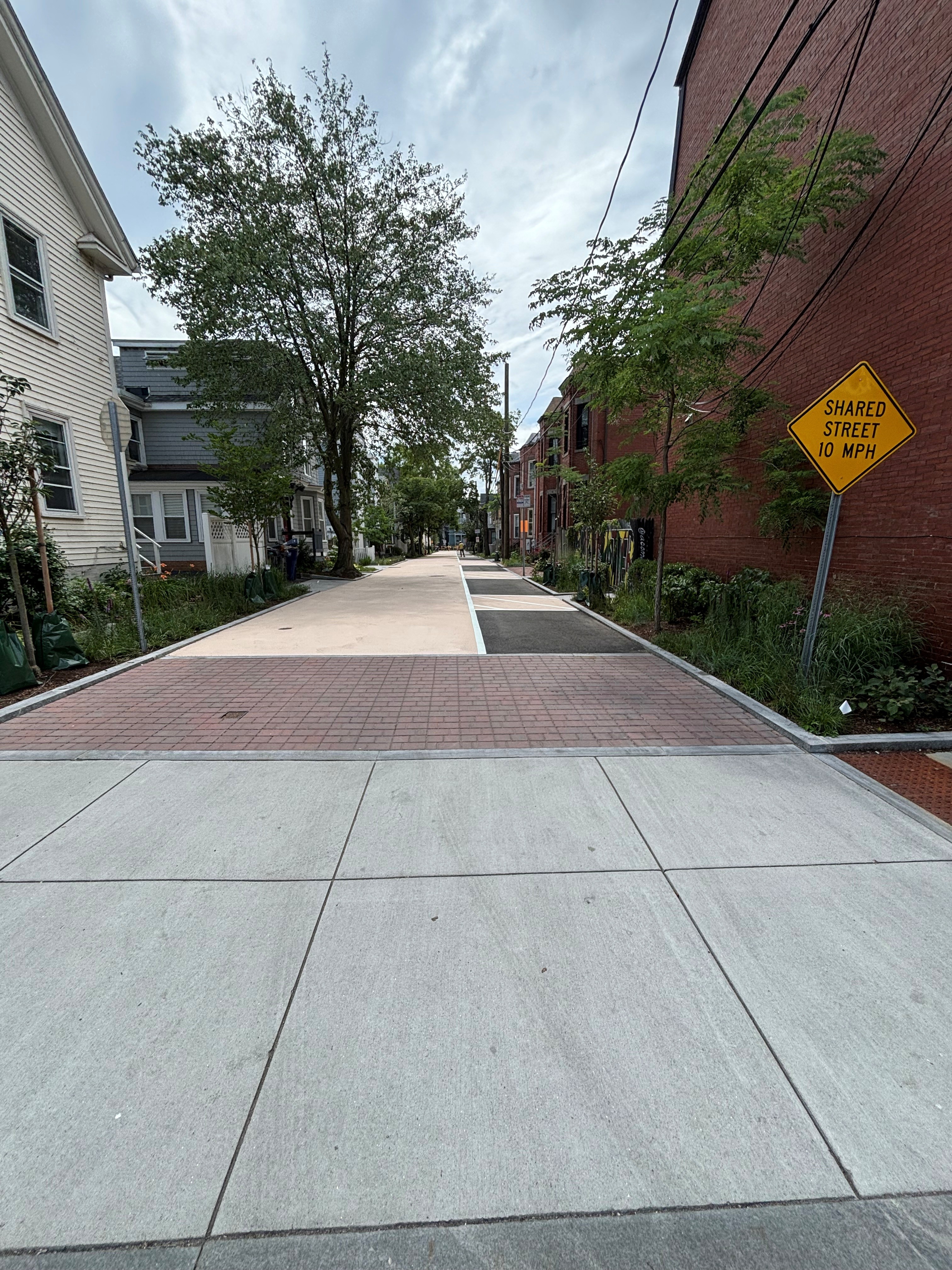
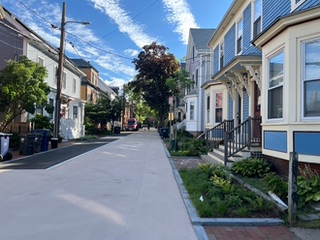
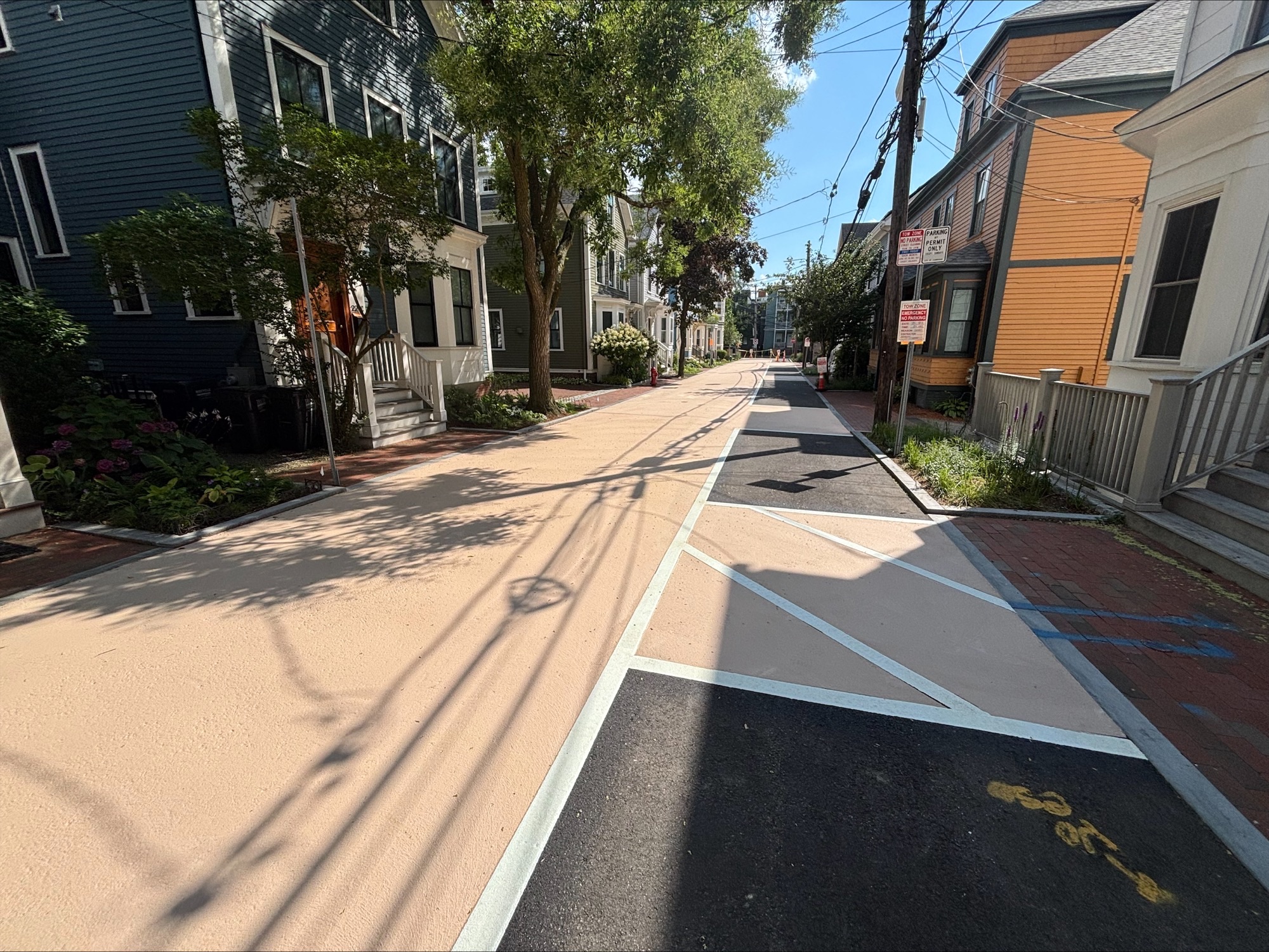
Fairmont Avenue has officially transformed into Cambridge’s newest Shared Street! With construction now complete, the response from neighbors has been overwhelmingly positive. Residents are already enjoying the refreshed look and enhanced community feel of the street.
Fairmont Ave was redesigned as a Shared Street as part of the broader River Street Reconstruction Project and the City’s Five-Year Sidewalk and Street Reconstruction Plan—a program focused on designing streets that safely serve people of all ages and abilities.
What Is a Shared Street?
Shared Streets, sometimes called “play streets” or “living room streets” internationally, are designed to give pedestrians priority while safely accommodating low-speed vehicles and cyclists. These streets are typically:
- Low-traffic roads used primarily by abutters
- Already operating informally like shared spaces
- Lined with large trees and narrow sidewalks that make reaching American with Disabilities Act (ADA) compliance difficult.
The design enhances neighborhood character by creating a space where people can walk, bike, gather, and build community, while maintaining low-speed vehicular access.
Why Fairmont Avenue?
Fairmont Ave was an ideal candidate for this kind of design. The street already had the feel of a Shared Street, and through neighborhood meetings and community input, the Shared Street concept was met with strong support from residents—especially when compared to more conventional options.
While Shared Streets are more complex to design and construct—especially when ensuring full ADA compliance and improved drainage—they offer unique advantages. For example, a conventional design on Fairmont would have preserved existing trees but wouldn’t have allowed for new tree planting due to the narrow width of the sidewalks. The Shared Street approach made space for both accessibility and added greenery.
Key Benefits of Fairmont’s Shared Street Design:
- Pavement coating: A visually distinct treatment that helps define shared space and reflects sunlight, reducing the surface temperature of the road.
- Increased tree canopy: Additional planting opportunities contribute to sustainability and shade.
- Full accessibility: Level, accessible walkways connect homes directly to the shared space in the street.
- More green space: Many sidewalk areas which were too narrow to be made accessible, were reclaimed for plantings and landscaping.
- Traffic calming: Speed tables at each end and updated signage enhance safety.
Lessons Learned and What’s Next
The City team gained valuable insights during the Fairmont Avenue project, particularly regarding the sequencing of work and the time-intensive nature of constructing such a detailed design. These lessons will help guide future Shared Street projects.
Several more Shared Streets are in development as part of the Port Infrastructure Project and the Complete Streets program, continuing the City’s commitment to creating safer, more vibrant, and inclusive neighborhood streets.