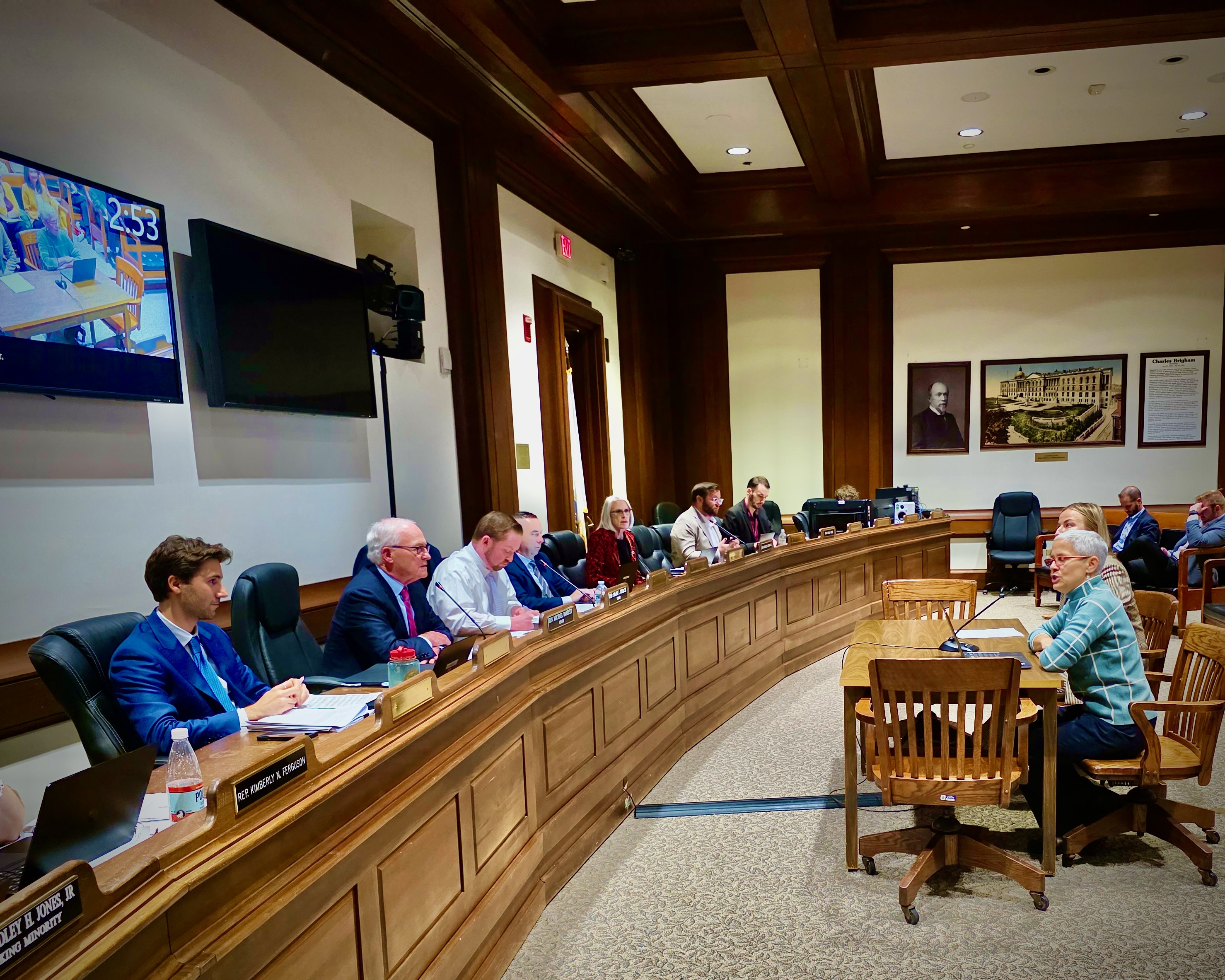
Cambridge Climate Chief Julie Wormser and Energy and Sustainability Project Manager Irina Sidorenko testified at the Massachusetts State House last week, urging lawmakers to lift so-called “net metering” caps that limit the amount of solar energy that can be sent back to the electric grid.
Speaking before the Joint Committee on Telecommunications, Utilities and Energy, the pair explained that the outdated restrictions threaten Cambridge’s work toward decarbonization and its goal of achieving net zero greenhouse gas emissions by 2050.
“If the local and regional caps on municipal solar stay in place, progress will come to a halt,” Sidorenko told lawmakers.
Massachusetts introduced net metering caps more than a decade ago to help utilities balance grid reliability and costs as solar power grew. But as the electric grid modernizes to handle more renewable energy, many municipal leaders argue the limits are outdated. For Cambridge, which has installed solar projects on schools and other City-owned buildings, the caps could soon prevent further progress toward fossil-fuel-free operations.
“These caps may have made sense ten years ago, when utilities were concerned about grid stability,” Sidorenko said. “But they are outdated today. What’s holding us back now are policy limits that no longer serve their purpose.”
Sidorenko noted that through City-owned behind-the-meter solar projects and by being an offtaker of virtual net metering credits, Cambridge has net-metered more than 7.3 megawatts of solar energy.
“Although we know that we can’t meet all our energy needs through on-site solar, it makes a big difference in our net energy bills and allows us to move off fossil fuels more affordably,” Wormser said.
Yet Cambridge is now approaching the state-mandated 10-megawatt cap on municipal solar generation. Once reached, the City will be legally barred from adding new solar projects — despite having several ready for installation on schools and municipal buildings. Deputy City Manager Kathy Watkins underscored the importance of legislative action to maintain local momentum.
“We’re ready to move forward with solar projects that can begin producing clean power,” Watkins said. “By lifting these outdated caps, the state can help cities like Cambridge cut costs, reduce emissions, and deliver the clean energy future our residents expect.”
Cambridge is one of several municipalities calling on lawmakers to amend the Healey Administration's Energy Affordability, Independence, and Innovation Bill (H.4144) to lift both local and regional caps. Wormser emphasized that removing them would also benefit rural communities, where municipal solar farms provide critical local revenue and clean energy generation.
“Without these reforms, shovel-ready solar projects will stall,” Sidorenko said. “With them, cities like Cambridge can continue leading the transition to clean, affordable, and resilient energy for the Commonwealth.”
Cambridge’s local decarbonization efforts include one of the state’s most ambitious building performance standards, which requires large non-residential buildings to be carbon-neutral by 2050. The City’s own municipal buildings are subject to the same standard.