



Cambridge has committed to reducing its greenhouse gas emissions to net zero by 2050. One of the largest sources of those emissions is burning fossil fuels to heat and cool buildings. Thermal energy networks are a promising way to provide the same heating and cooling using clean energy.
By sharing heating and cooling between buildings and using underground energy nearby, they could also reduce the amount of electricity needed on very hot or very cold days. This would help to reduce pressure on our electric grid. Because thermal energy networks rely on local energy sources rather than imported fuels, they could improve energy security and give communities more control over where their energy comes from.

Thermal Energy Networks
Cambridge is studying whether a shared local network of underground pipes could provide safe and reliable heating and cooling for buildings without using fossil fuels. A thermal energy network connects multiple buildings and often uses geothermal energy, which is the Earth's natural temperature, as a source of clean energy. While it’s unlikely that Cambridge will build a large-scale, City-owned thermal energy network in the near future, City staff are working with engineering experts to understand how we might use thermal energy networks as opportunities arise.
Why is Cambridge considering a thermal energy network?
What have we learned about whether a thermal energy network could work in Cambridge?
 Cambridge started work on a feasibility study in 2025 in partnership with engineering experts. We assessed our options given challenges including existing dense neighborhoods, congested underground utilities in the street, the complexities of ownership and maintenance of a system, construction and operating costs, and complicated permitting. Those obstacles led the City to conclude that building a standalone, municipal public geothermal system in the next five years is not possible.
 Instead, we’re examining what it would take to build a thermal energy network when the opportunity arises, like when we renovate a public open space, or when there is a larger-scale redevelopment project. The study is helping the City understand the potential costs involved — for buildings and our streets. We chose to examine a few sites with the following qualities:
- Can be replicated or expanded to other places in the city
- Serves a mix of building types, both for energy sharing and to learn what we need to do to connect different building types with different HVAC systems to a shared network
- Fits in with the City's planning priorities for public spaces
What's next for the thermal energy network study?
On Tuesday, Sept. 29 at 6 p.m., we invite you to join us for a presentation and Q&A on the City's feasibility study, exploring what it would take to build a neighborhood-scale Thermal Energy Network in Cambridge. Register here.
We are participating in and/or paying attention to these two broader efforts:
- The Bigger Picture: BosTEN
In summer 2026, the Boston Green Ribbon Commission will launch the Boston-Area Thermal Energy Network Project, or BosTEN Project. The project will explore the technical, regulatory, and economic feasibility of using thermal energy from Boston-area water sources to support a transition away from the use of natural gas. One of the potential sources of heat identified is the Charles River.
Through summer 2027, the City of Cambridge’s Office of Sustainability will serve as a member of the project’s Stakeholder Advisory Group to help inform the design of this regional project, ensure that the study reflects the needs and local conditions of Cambridge, provide data, and provide feedback on deliverables and recommendations.
- On the Horizon: TENs for New Construction
Meanwhile, in September 2025, our local utility, Eversource, proposed a new framework to provide networked geothermal services and a mechanism to sell thermal energy. This would allow a utility to bring geothermal energy to areas with new businesses and homes, like it does for gas and electricity. Eversource’s proposal to the Department of Public Utilities, Docket #35-86, is under active investigation. You can find the latest information here.
How is geothermal technology already used in Cambridge?
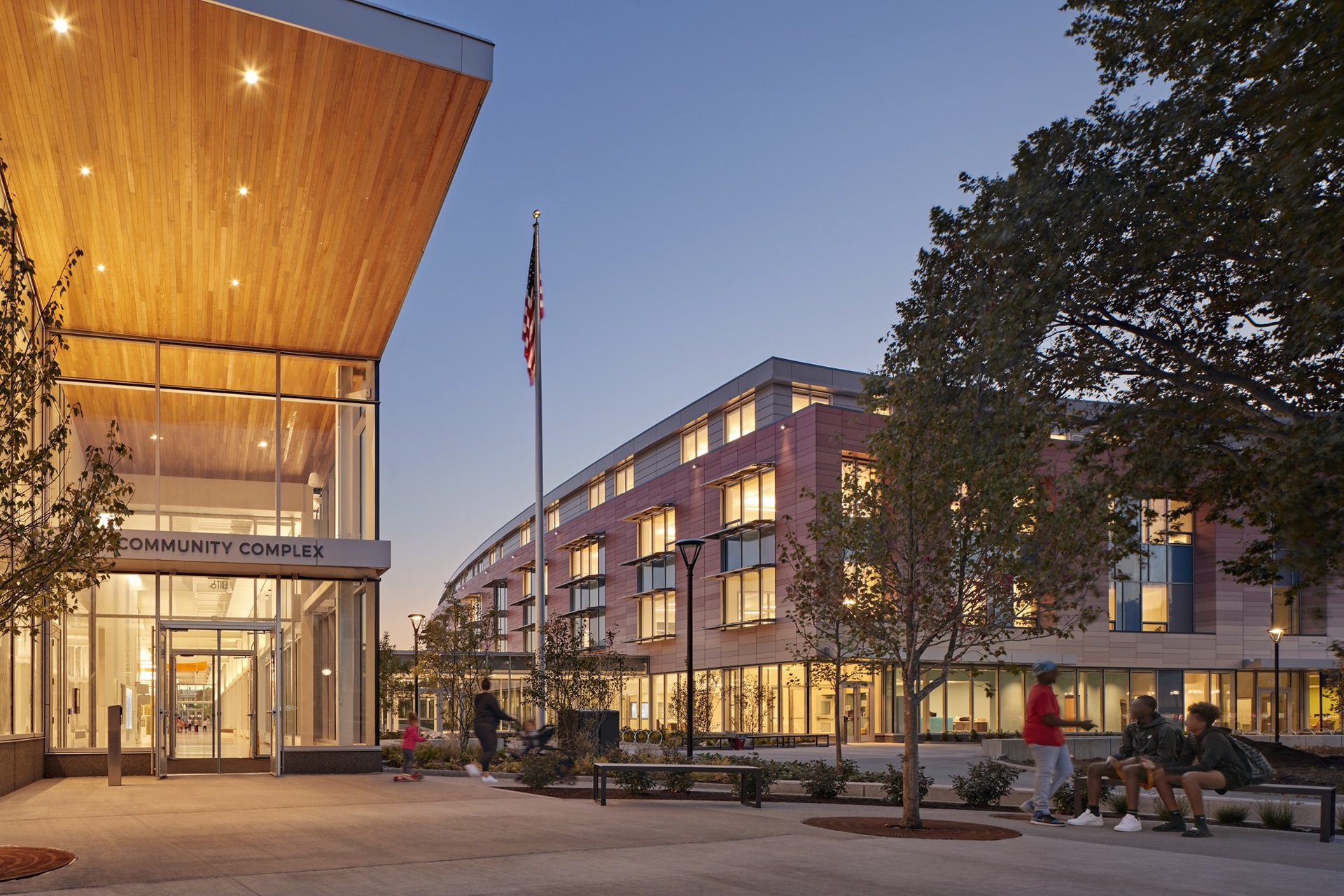
Cambridge has already built several City buildings that are heated and cooled with geothermal systems. The City considers using geothermal sources whenever we plan a major building project, like a renovation or rebuild. A ground-source heat pump for heating and cooling is one of our strongest options in our new buildings to shift away from fossil fuels and meet our climate goals. Some of the municipal buildings with geothermal systems include:
- King Open/Cambridge Street Upper Schools and Community Complex: 198 wells, 550’ deep
- Historic Cambridge Fire Headquarters: 16 wells, 750’ deep
- MLK School: 78 wells, 550’ deep
- Tobin Montessori & Vassal Lane Upper Schools: 76 wells
- DPW Simard Building: 5 wells, 500’ deep
- River Street Firehouse: 2 wells, 675’ deep
- City Hall Annex
Where can I find more information about thermal energy networks?
- Gas and electric utility Eversource built a pilot thermal energy network in Framingham that started operating in 2024. Learn more about it here.
- The Vermont Community Thermal Networks group put together a 4-minute video about thermal energy networks. Find it here.
- MIT's January 2025 short course: Geothermal Energy Networks: Transforming Our Thermal Energy System is available here.
- If you want a deeper dive, take a look at this overview from NEEP. It explains, in simple terms, how thermal energy networks work, why communities are exploring them, and some of the benefits and tradeoffs of creating shared neighborhood heating and cooling systems.