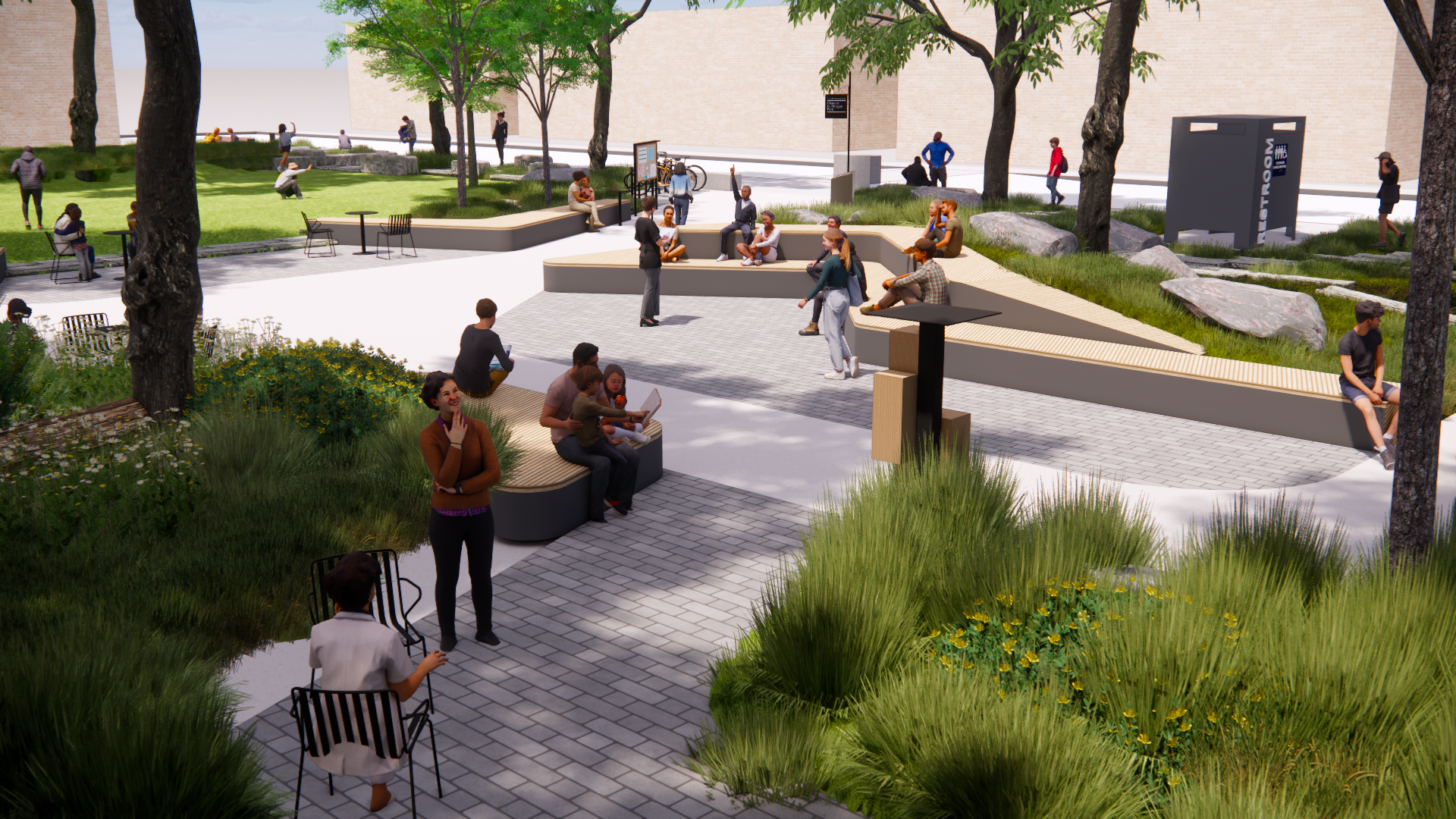
Yon gwo envestisman nan katye The Port ap transfòme leson tan lontan yo an yon plan aksyon pou yon avni ki pi rezistan.
Nan katye Port Cambridge la, chanjman ap fèt—sitou anba tè. Anba lari ak twotwa familye yo, Vil la ap antreprann youn nan efò amelyorasyon enfrastrikti ki pi anbisye li yo jiska prezan: Pwojè Enfrastrikti The Port. Inisyativ plizyè ane sa a te pwoteje epi li pral pwoteje kay, lari ak espas piblik yo kont menas inondasyon k ap ogmante, tout pandan y ap kreye yon katye anlè tè ki pi vèt, ki pi konekte ak ki pi aksesib.
Fè Fas ak Defi yon Klima k ap Chanje
The Port te lontan youn nan katye Cambridge ki pi vilnerab pou inondasyon. Avèk anpil bilding ki nan altitid ki ba, menm tanpèt modere yo istorikman te lakoz dlo akimile nan sousòl ak nan lari yo. Chanjman klimatik la vin plis ogmante defi sa yo, sa ki pote pi plis lapli pi souvan nan rejyon an.
“Done yo montre sa rezidan yo te konnen depi lontan—The Port te santi enpak inondasyon yo dirèkteman,” se sa Jerry Friedman, Enjenyè Sipèvizè, Cambridge Public Works te di.. “Envestisman nou an isit la se plis pase tiyo ak betonaj. Li konsène bati rezistans ak pwoteje yon kominote ki nan kè Cambridge.”
Yon Gwo Envestisman Vil la nan Rezistans Katye
Pandan pwojè sa a, ki te kòmanse avèk yon pwosesis konsepsyon ak kominotè fòmèl an 2015, Cambridge pral envesti plis pase 35 milyon dola nan The Port pou yon pake amelyorasyon entegre: nouvo sistèm dlo, egou, ak drenaj; lari ak twotwa ki rekonstwi; ak elaji kouvèti pyebwa ak espas ouvè.
Nan sant travay sa a genyen yon tank estokaj dlo lapli anba tè ak yon tank estokaj sanitè ak yon estasyon pou ponpe.
Tank estokaj dlo lapli a—ki sitiye anba Pakin 6 sou Bishop Allen Drive—te fini an 2021. Li ka kenbe jiska 390,000 galon dlo lapli, avèk sipò yon nouvo estasyon pou ponpe ak yon tinèl sèvis piblik ki konekte anba Red Line (Liy Wouj) MBTA a ak drenaj dlo lapli Massachusetts Avenue an. Dezyèm tank la pral enstale nan yon faz alavni nan ane 2030 yo akote Windsor Street.
Plis Pase Enfrastrikti: Lari, Pak, ak Aksè Chak Jou
Anplis jesyon dlo lapli, Pwojè The Port se yon opòtinite pou re-envesti nan katye a. Yo te rebati epi y ap rebati lari ak twotwa akote Bishop Allen Drive, Columbia Street, Cherry Street, Washington Street, Eaton Street, ak Pine Street pou pi bon aksè, sekirite, ak konfò.
Mizajou nan konsepsyon yo gen ladan yo lari pataje ki bay pyeton priyorite, kreye espas pou pyebwa ak plantasyon, epi ajoute espas ekolojik kote twotwa tradisyonèl yo te ye anvan. Vil la te elaji tou enfrastrikti pou rechaje machin elektrik (EV) nan zòn nan, pou fè avanse objektif Cambridge pou diminye emisyon gaz ki lakoz efè tèmik.
Yon Pak Renove pou yon Katye Renove
Clement Morgan Park ak Anthony Paolillo Tot Lot — yon espas kominotè vital nan The Port — ap reyimajine tou. Reyamenajman an prezève pyebwa ki fin grandi ak touf lila pandan l ap prezante nouvo espas ki fòme dapre fidbak rezidan yo. Y ap rekonstwi teren baskètbòl ki itilize anpil la pou mete plis espas pou espektatè ak nouvo ekleraj ak sifas. Karakteristik ki totalman nouvo yo enkli yon "espas pou adolesan/zòn bouldering (pou eskalade)" ansanm ak yon ti kote pou chen jwe.
“Rezidan yo te mande nou pou asire ke amelyorasyon yo reflete fason moun yo reyèlman itilize pak la,” se sa Kathy Watkins, City Manager Adjwen, Cambridge te di. "reyamenajman sa a kenbe sa nou renmen yo, amelyore sa nou bezwen, epi prepare pak la pou avni."
Yon Angajman Pataje pou Lavni
Soti nan ranplasman prensipal gaz rive nan amelyorasyon tiyo dlo, prèske tout aspè nan enfrastrikti The Port ap renove — kèk ladan yo pou premye fwa nan yon syèk. An kolaborasyon ant depatman Vil la, Eversource, ak kominote a souliye angajman alontèm Cambridge pou dirabilite, ekite, ak aksè.
Lè pwojè solid sa a fini nan kòmansman ane 2030 yo, li p ap jis kite dèyè nouvo tiyo ak betonaj. Li pral bay lapè nan lespri—lè nou konnen The Port pi byen prepare pou tanpèt k ap vini yo, epi Vil la ap kontinye envesti anpil nan byennèt chak katye.