U.S. flag

An official website of the United States government

Official websites use .gov
A .gov website belongs to an official government organization in the United States.

Secure .gov websites use HTTPS
A lock ( ) or https:// means you’ve safely connected to the .gov website. Share sensitive information only on official, secure websites.

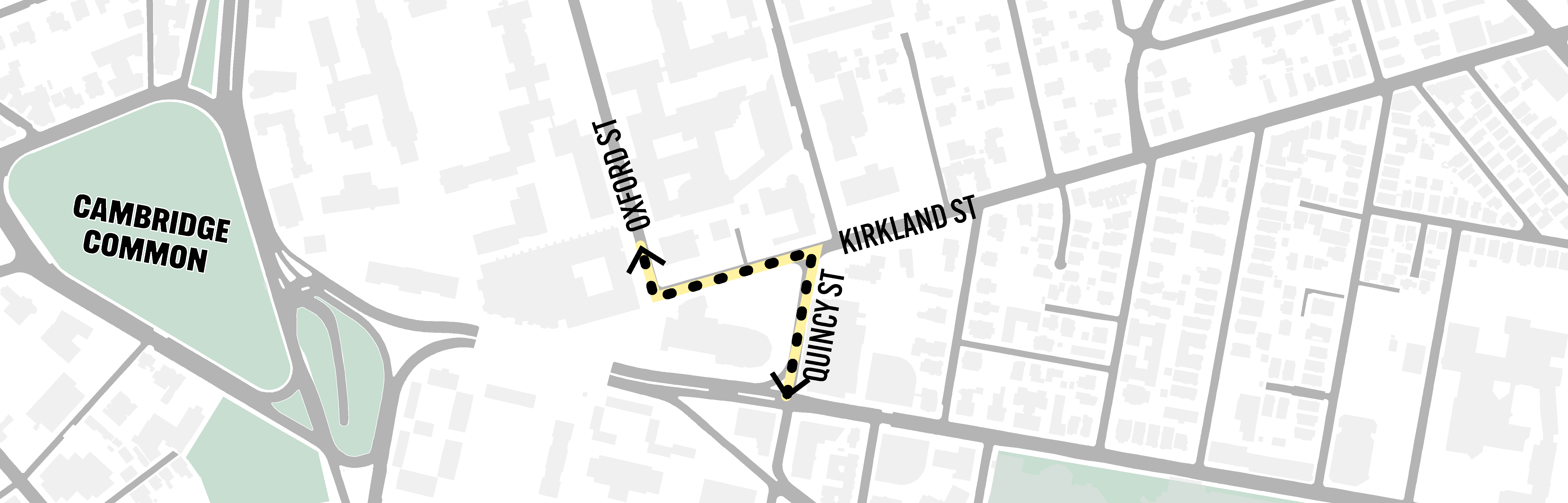
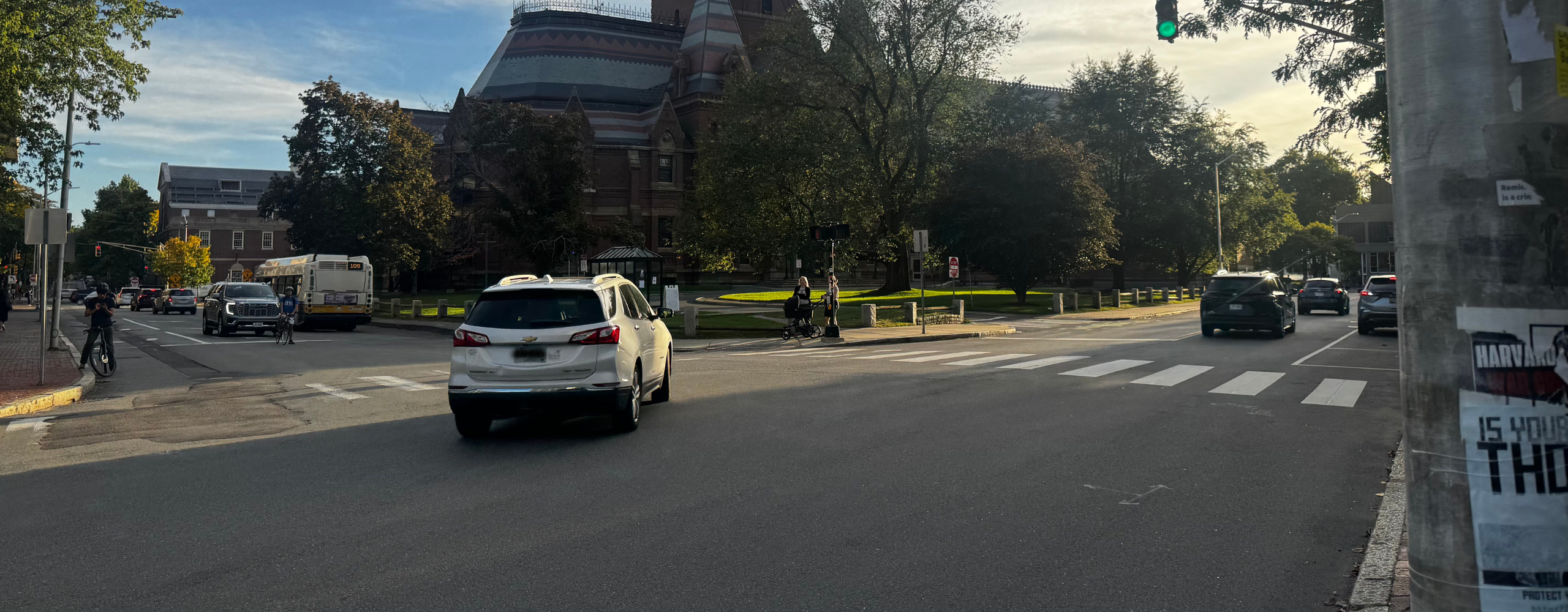
Image of the street location of quincy and kirkland

Quincy - Western Kirkland Safety Improvement Project

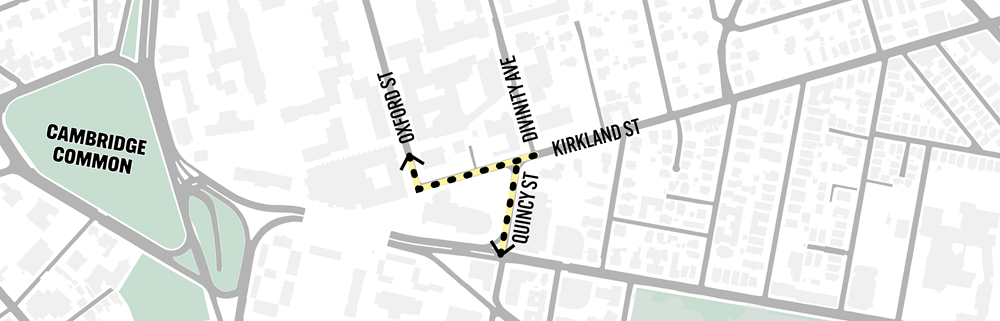
The City of Cambridge is installing roadway improvements on Quincy St between Cambridge St and Kirkland St and Kirkland St between Quincy St and Oxford St.


What to expect:


Quincy St: Between Cambridge St and Kirkland St

  • Bike Lane Installation: The project will install bike lanes on Quincy Street, using a mix of separated, buffered, and standard marked lanes. These improvements will make biking safer and more comfortable for all users.
  • Street and Sidewalk Repairs: The City will work with Eversource Gas to restore the sidewalk that was partially removed for utility work.
  • Updated Street Design: Quincy Street will have one travel lane in each direction, making the temporary lane reduction used during construction permanent.


Western Kirkland St: Between Oxford St and Quincy St

  • Installing Separated Bike Lanes: This includes quick-build style lanes in both directions on a small section of Kirkland St.
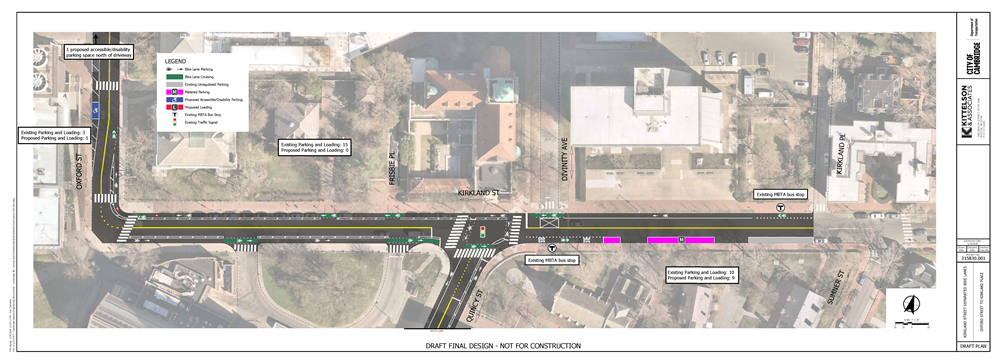
  • Reducing Parking: This work will require the permanent removal of approximately 15 parking spaces on Kirkland St between Oxford St and Quincy St.

This work is planned for Spring 2026, with outreach over the Fall and Winter. Kirkland St is not affected by the nearby utility work on Quincy St.

These changes will help us meet the requirements of the Cambridge Cycling Safety Ordinance, support our Vision Zero goal to eliminate crashes resulting in fatalities and serious injuries, and bring us closer to realizing the Cambridge Bicycle Network Vision.

Project Area Map:
Plans

Plans for Quincy St between Cambridge St and Kirkland St are now available. View the plans in greater detail.


Plan Development

Plan development for these projects is broken into two phases. In Fall 2025, we'll tackle Quincy St. In Spring 2026, work will continue on Western Kirkland St.

Fall 2025: Quincy St (We're Here!)
Limits: Cambridge St to Kirkland St
Draft design for this section is now available. Roadway restoration work by Eversource is underway. We expect to finish this section in December 2025.
 
Project Status: Work Underway.
Timeline: November to December 2025
Spring 2026: Western Kirkland St
Limits: Oxford St to Quincy St

Design work on this section is just getting started. We expect to have a design in Winter 2026, with installation in Spring 2026.

Project Status: Design Underway, Outreach Coming Soon. Timeline coming soon.
 

Get Involved

We want to hear from you! 

Sign Up for Project Emails

Sign up for project email updates to receive timely information on upcoming  project milestones, and other important notices.

Sign Up for Email Alerts

Set up a 1:1

Our project team is happy to meet with businesses, residents, organizations, and groups. Reach out to schedule a phone call, video chat, or in-person meeting by emailing us or calling 617-349-9162.

Project Feedback Form

Let us know your thoughts by leaving a comment on the project. For questions you would like an answer to, please contact the project manager directly.

Submit Your Comment

Upcoming Meetings

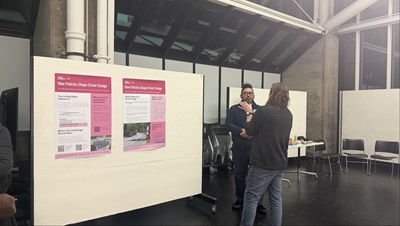
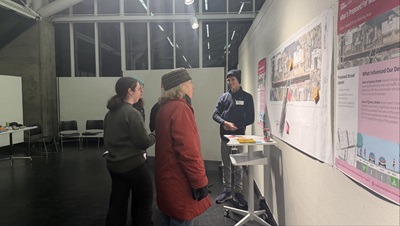
January 22, 2026: Project Open House

Stop by at any time to learn about the proposed design, learn about the schedule and expected impacts, and share your feedback.

Thursday, January 22, 2026 • 5:30 PM – 7:30 PM
Harvard Graduate School of Design, Gund Hall
Calendar Listing


More Project Information

Project Area Map

Click on the image below to view it in a larger format. 

Installation Updates

November 7, 2025: Eversource Restoration Work on Quincy St Begins

City staff distributed flyers and placed laminated posters on the street about the changes to Quincy St. A copy of the flyer can be viewed here. This included:

  • Information regarding the sidewalk restoration underway.
  • Plans for repaving and pavement markings following the completion of the roadway restoration work. 

Email Updates

  • November 7, 2025: Project Launch Email

Data

CSO Project Selection Technical Memo

The City launched a process in late 2024 and early 2025 to identify the remainder of streets that will complete the requirements of the Cycling Safety Ordinance. Kirkland St was included in that study.

Additional information on the Cycling Safety Ordinance (CSO), including the selection process for selecting streets for the CSO, can be found...

Fall 2024 Data Collection

The City collected vehicle, pedestrian and bicycle counts in anticipation of this project.

Bicycling in Cambridge Data Report

A 2023 report on bicycling counts in Cambridge is available to view. Read the report here. The 2025 report will be coming soon!

Policy and Design Background

The Cycling Safety Ordinance

In 2019, the Cambridge City Council passed the Cycling Safety Ordinance. The 2019 Ordinance requires the City to install separated bike lanes when:

In 2020, the Cambridge City Council passed amendments to the ordinance, requiring the installation of about 25 miles of separated bike lanes within the next five to seven years. The ordinance requires that the City install separated bike lanes on:

  • All of Massachusetts Avenue
  • Garden Street, eastbound from Huron Avenue to Berkeley Street and westbound from Mason Street to Huron Avenue
  • Broadway from Quincy Street to Hampshire Street
  • Cambridge Street from Oak Street to Second Street
  • Hampshire Street from Amory Street to Broadway
  • 11.6 miles in other locations from the 2020 Bicycle Plan

What do separated bike lanes look like?

Mt Auburn St at Holyoke St - Before and After

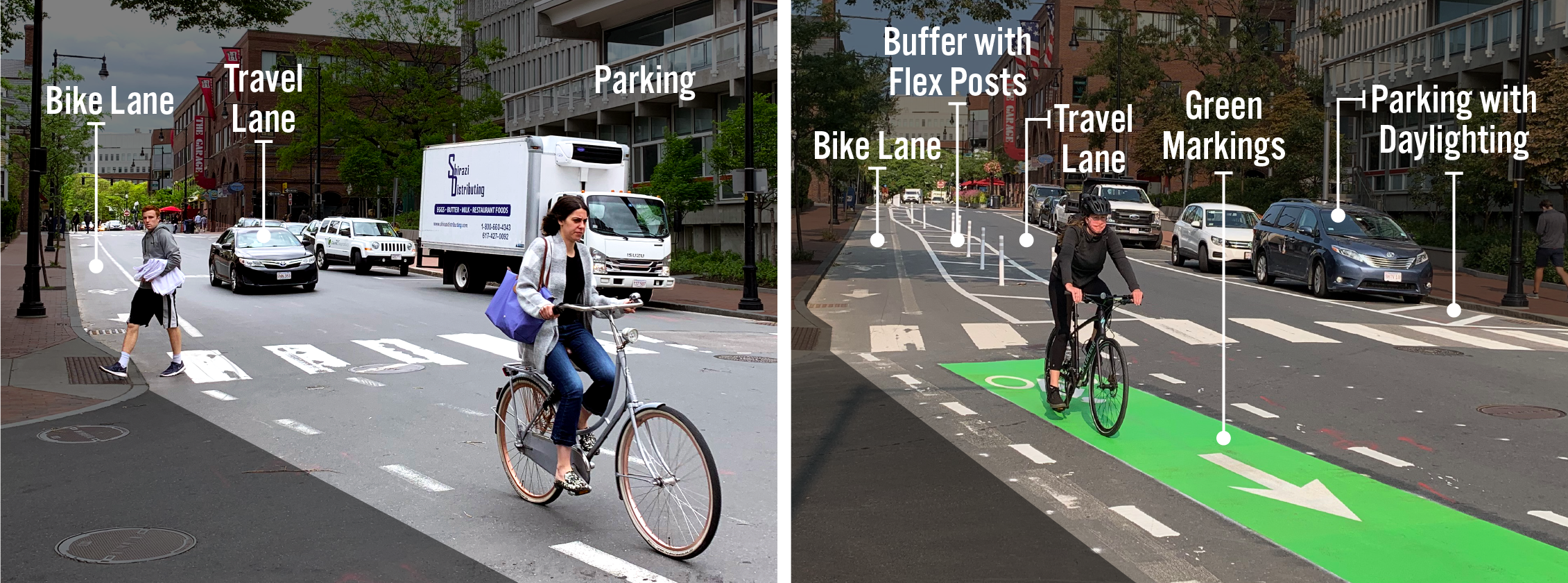
The images below show Mt Auburn St at Holyoke St before and after separated bike lanes were installed as a part of the Inner Mount Auburn Safety Improvement Project.

The left image shows Inner Mt Auburn St with a standard bike lane, travel lane, and a parking lane. The right image shows Inner Mt Auburn St with a bike lane, buffer area with flex posts, a travel lane, a parking lane, and daylighting.

Key Components of Separated Bike Lanes

  • Bike lanes create dedicated space for people who are biking.
  • Buffers (painted lines on the street) create space between people biking and people driving. They help prevent unintentional collisions that could cause serious harm to the people involved. Depending on the location, there may be a parking lane next to the buffer area. In these instances, drivers can use the buffer area to safely get in and out of the car and to load and unload items.
  • Flex posts are placed in the buffer area and serve as a vertical barrier in the buffer area.
  • Travel lanes allow space for people to drive down the street, but can be used by anyone.
  • Green markings help alert people turning from the travel lane that they should look out for people on bikes. These are generally installed at intersections and across driveways.
  • Parking creates space for people to store their vehicles while they are in the area. This part of the street may also be designated as loading zones, which help make it easier for delivery people to do their jobs.
  • Daylighting is when the parking lane is pulled back 20 feet to make it easier for people driving down the street and people waiting to cross the street to see each other. These areas are generally marked with lines on the ground. There may also be flex posts.

Why Install Separated Bike Lanes

Separated bike lanes provide more space and vertical separation between people on bikes and people in cars. More people are comfortable biking in separated bike lanes than in traditional bike lanes or in traffic with cars, buses, and trucks. Separated bike lanes also increase safety for people walking by reducing crossing distances. As we install separated bike lanes, we also look for opportunities to increase visibility at intersections, refresh crosswalk markings, and install appropriate pedestrian crossing signs.

What guides our street design?

In Cambridge, we take a human-centered approach to street design, engineered to prevent errors as much as possible and lessen the impacts of errors when they do happen.

We design for all ages and abilities. This includes:

  • Designing our streets for people who may not have access to a car
  • Designing our streets to protect the most vulnerable road users, like cyclists and pedestrians
  • Creating safe and accessible facilities, including bike lanes, that can be used by a wide range of people

Our focus is on moving people and goods, not their vehicles

  • Biking and riding transit is a more efficient use of limited street space
  • We keep access for trucks and local deliveries, but safely.

Other Streets and Transportation Projects

Looking for information on other streets and transportation projects in the City? Three City departments collaborate on the design, community engagement, installation, and construction for street and transportation improvements: the Community Development Department, Public Works Department, and Traffic, Parking, and Transportation Department.

Contact Us

How can we help?

Please provide as much detail below as possible so City staff can respond to your inquiry:

As a governmental entity, the Massachusetts Public Records Law applies to records made or received by the City. Any information received through use of this site is subject to the same provisions as information provided on paper.

Read our complete privacy statement


Service Requests

Enter a service request via SeeClickFix for things like missed trash pickups, potholes, etc., click here