






Extreme Heat

Follow this link to explore our Heat Risk StoryMap, which explains the causes and impact of extreme heat in Cambridge.
Climate change is heating the planet, and the last few years were among the hottest on record. Research suggests New England is warming faster than other parts of the world. In Cambridge, high temperatures are becoming more common – and heat waves are lasting longer.
That means our bodies have less time to recover. Extreme heat can affect everyone, but older adults, children, outdoor workers, and people with existing illnesses are especially at risk.
The City is taking steps to prepare. Resilience Hubs, Cool Spots, and NeighborHubs like The Foundry offer places to stay cool. Programs like Shade is Social Justice are creating more shady spaces where people can find relief, while Urban Forestry staff are planting trees suited for a warming climate.
Cambridge is also working with MIT to map temperatures using sensors, and studying rooftops to develop cooling strategies. Heat Justice Liaisons are working with communities to create more solutions.
You can help keep the City and its residents safe. Below you'll find practical information to help you prepare for extreme heat, recognize signs of heat illness, and keep yourself and your neighbors safe when temperatures rise.
Prepare for Extreme Heat
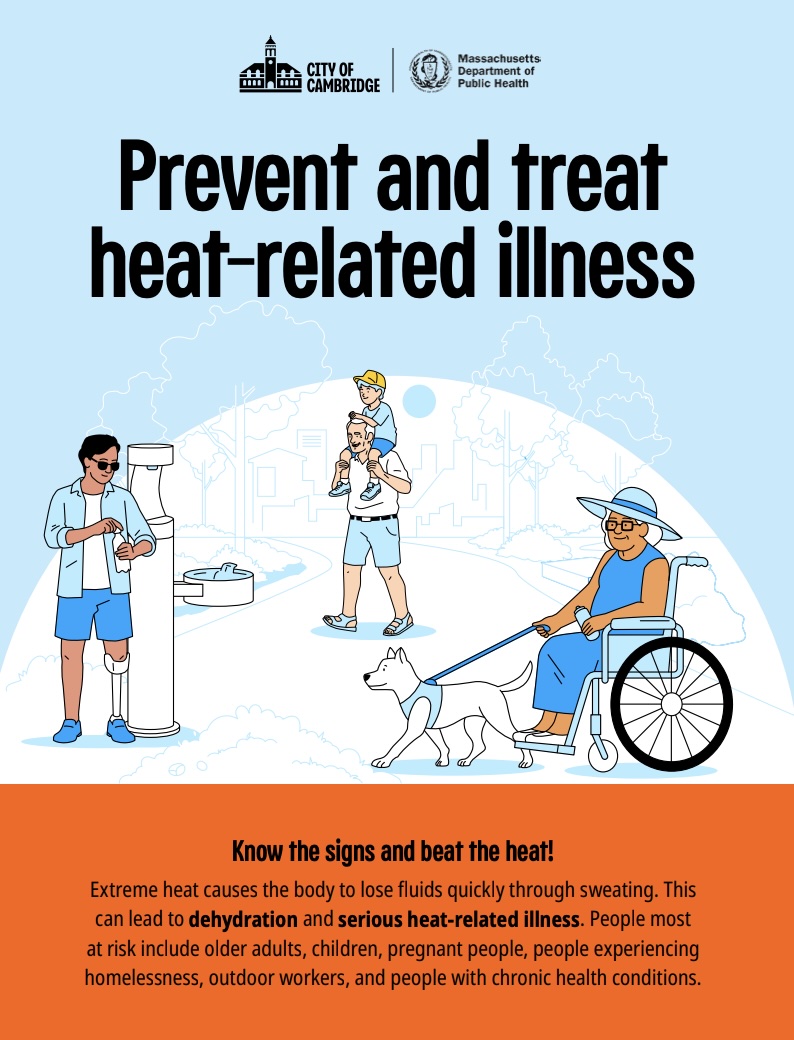
Download this flyer here.
Learn the Signs of Heat-Related Illness
Extreme heat causes the body to lose fluids quickly through sweating. This can lead to dehydration and serious heat-related illness. People most at risk include older adults, children, pregnant people, people experiencing homelessness, outdoor workers, and people with chronic health conditions. Common warning signs include:
- Lots of sweating
- Muscle cramps
- Feeling tired or weak
- Cold, pale, clammy skin
- Nausea or vomiting
- Headache or dizziness
- Irritability
- High body temperature
- Seizures
- Altered mental state or confusion
- Unconsciousness (passing out)
If you notice these symptoms in yourself or someone else, move to a cooler place, drink water, and seek medical help if symptoms worsen. Learn more about heat-related illness and when to seek medical care from the Massachusetts Department of Public Health and at Heat.gov.
Understand How Your Medications Might Be Affected by Heat
Some medications can increase the risk of heat-related illness. Medications can increase sensitivity to the heat or the sun, reduce thirst, impair sweating, and cause other effects that put people more at risk as the temperature rises. Heat can also degrade medications. Since individuals aged 65 and over and those with chronic illnesses are more likely to take medications, they are more likely to be impacted by these issues.
- Talk to your doctor about your medications to learn which ones can increase the risk of heat-related illness or sunburn/skin irritation.
- Store medications properly.
- Do not stop taking your medications without consulting your medical provider.
- Some skincare products can make you more sensitive to the sun. Read product labels and practice wearing sunscreen and other sun protection methods while using these products.
Know Where to Cool Down
During extreme heat, it’s important to know where you can go to cool off and stay hydrated — especially if your home loses power or doesn’t have air conditioning. If you have to spend time outside, plan to be in the shade, or in the water. Use our "Get Cool and Get Hydrated Map" to find water fountains, air conditioning, shade, and more.
Make a list of nearby places to go to stay cool, and keep it somewhere easy to find.
Places to cool off in Cambridge include:
- Free public indoor spaces like Cambridge Public Libraries and The Foundry
- Cambridge Cool Spots — public outdoor spaces where residents can cool off
- MIT Cool Spots open to the public
- The Cambridge Senior Center (for older adults)
- Air-conditioned public places such as movie theaters or CambridgeSide
- Splash pads and pools
- Parks with water features (open effective May 18, 2026)
Pools operated by the Massachusetts Department of Conservation & Recreation — including Veterans Memorial Pool and McCrehan Memorial Pool — are also open in the summer in Cambridge.
What To Do Once Heat Hits
Keep Your Home Cool
- Close windows and blinds during the hottest parts of the day. Turn off non-essential lights and appliances to conserve energy and help avoid power disruptions. If the temperature cools off at night, open your windows to “flush” rooms. Opening windows across from each other will help air flow, too.
- Use air conditioning or fans when possible. If you're concerned about electricity costs, check if you're eligible for discounted rates from Eversource or through the Cambridge Energy Helpline.
Take Care of Yourself
- Stay hydrated. Drink water regularly, even if you don't feel thirsty. During extreme heat, aim for two to four glasses of water per hour. Avoid alcohol, excessive caffeine, and sugary drinks. Bring water with you.
- Limit outdoor activity to early morning or evening. If you must be outside, take frequent breaks in the shade. Learn more on the FDA’s website.
- Wear lightweight, loose-fitting clothing, a wide-brimmed hat, and sunglasses to protect yourself from the sun. Use sunscreen and lip balm with sunscreen.
- Take cool showers or use damp cloths or cooling towels on your neck and wrists to lower your body temperature.
- Check your skin regularly. Keep an eye on your skin for any new spots, spots that itch, or a mole that is changing shape, size, or color. Learn how to do a skin self-exam and how to check your skin for signs of cancer. Learn more on the American Academy of Dermatology Association’s How to Treat Sunburn page and the CDC’s Sun Exposure at Work page.
Take Care of Others
- Check on elderly neighbors twice a day during extreme heat. Young children and people with chronic health conditions should also be monitored for heat-related illnesses.
- Know the signs of heat-related illnesses and the proper responses.
- Check on people who are unhoused. If you are concerned about a person who is unhoused, please call First Step at (617) 592-6895 or call 911 if the person is experiencing an emergency.
Call 911 if you see someone with signs of heat stroke. What to look for: high body temperature (above 103 F); throbbing headache; seizures; altered mental state or confusion; losing consciousness. Heat stroke can be fatal, so it is important to get immediate medical attention.
Keep Pets Safe
Extreme heat can also be dangerous for pets. Never leave animals in a parked car, even with windows open. It can get dangerously hot quickly.
Pets cannot cool themselves as efficiently as humans. Make sure they have:
- Plenty of fresh water
- Shade
- A cool indoor space when possible
Hot pavement can burn your pet’s paws. Walk dogs during cooler hours of the day. Learn more about keeping pets safe with these tips.
Help Reduce Peak Demand
Extreme heat can result in peak demand on New England’s electricity supply. To support this, we can all take steps to reduce energy use during peak usage times, generally from 4 p.m. and 8 p.m. These actions will reduce the strain on the region’s power grid, lower electricity costs and reduce greenhouse gas emissions.
How you can help:
- Raising air conditioning temperatures by a few degrees in the afternoon.
- Turning off lights anywhere they are not critical and dim others if possible.
- Turning off air conditioning and fans in unoccupied areas.
- Turning off lights and window air conditioners at the end of the day.
- Closing window shades to keep out the sun’s heat.
- Unplugging any phone/laptop and other device chargers from outlets to reduce the plug load.
- If you drive an EV, please charge it overnight or after peak hours (after 8 p.m.) rather than during the afternoon
While these actions are unlikely to have a significant impact on your comfort, you may notice a slight increase in temperature in the late afternoon. We appreciate everyone playing a role in doing your part this week and every week to help as we collectively work to reduce the peak load.
What To Do During a Power Outage
A power outage, also known as a blackout, is a total loss of power and can cause significant disruptions. When one happens, take these steps:
- Check current power outages in Massachusetts: Power Outage Map.
- Call Eversource (formerly NSTAR) at 1-800-592-2000 to report power outages and get restoration information. Do not call 9-1-1 to report an outage or to ask about power restoration.
- Keep refrigerator and freezer doors closed. An unopened refrigerator will keep food cold for about four hours. A full freezer will keep the temperature for about 48 hours.
- If possible, use flashlights instead of candles. Never leave a burning candle unattended.
- Find a location to cool down. Use the Know Where to Cool Down Map above.
- Check on family, friends, and neighbors, especially the elderly, those who live alone, those with medical conditions, and those who may need additional assistance.
- After a power outage, contact your doctor if you’re concerned that medications that require refrigeration have spoiled.
- More safety tips can be found on the Massachusetts Emergency Management Agency’s website.
Learn More About How to Handle Heat
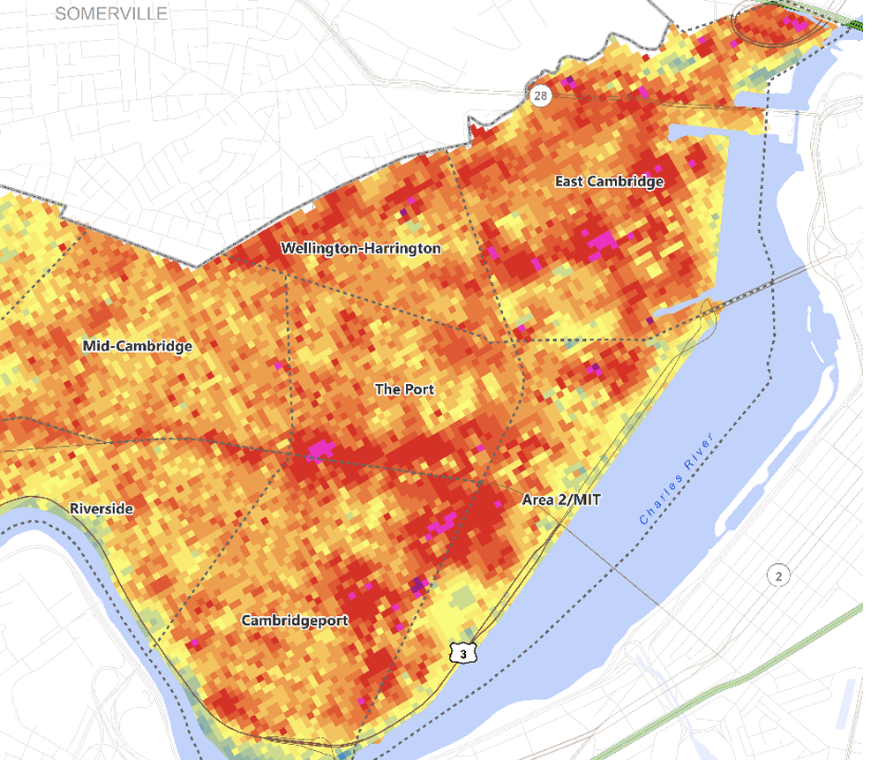
Follow this link to view our Heat Sensors StoryMap, with information about which areas in Cambridge are hottest and why.
Explore this map to learn more about what areas of Cambridge to avoid when it's hot. And for health-related questions, specialists at the Massachusetts Department of Public Health, Bureau of Climate and Environmental Health, are available at (617) 624-5757 (TTY: (617) 624-5286). Do not call during an emergency.
Printable Resources
Download printable heat-safety flyers:
- Ready for Heat – Residents
- Ready for Heat – Businesses and Organizations
- Prevent and Treat Heat-Related Illnesses
- How to Stay Cool
Ready for Heat information is also available in the following languages:
For more detailed downloadable resources: